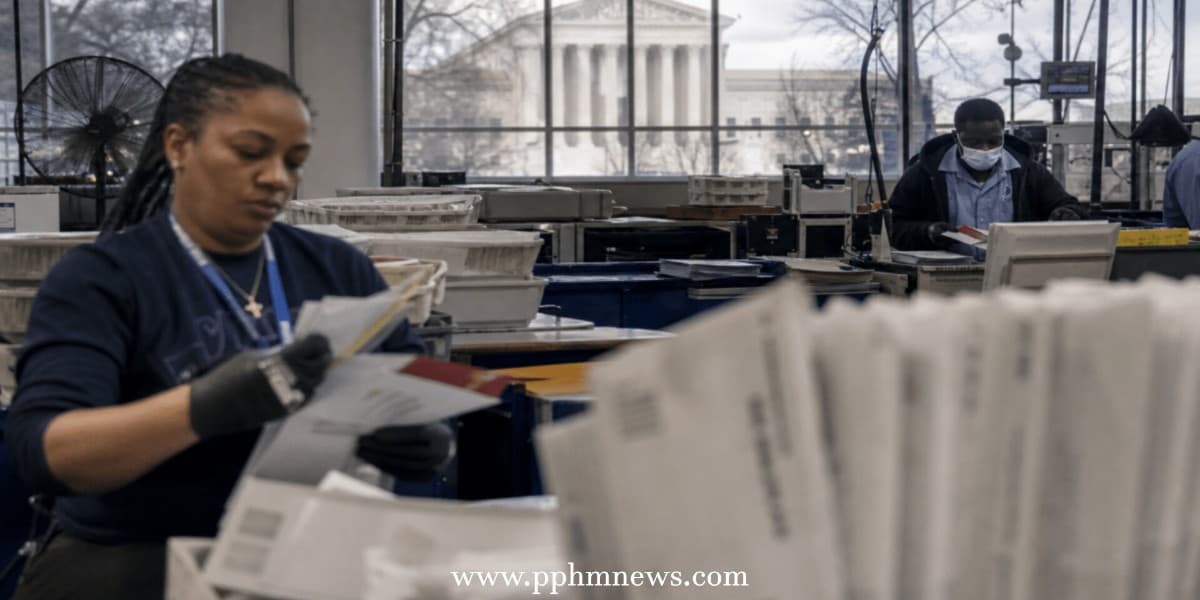
Postal Agency Advances Election Mail Rules While Justices Weigh Legal Challenge
The U.S. Postal Service is moving to finalize controversial regulations that could give the federal government greater authority over how mail-in ballots are handled, even as the U.S. Supreme Court considers whether the underlying policy is lawful.
The proposed changes stem from an executive order signed by President Donald Trump in March that instructed USPS to establish standards for determining which voters would be eligible to use mail-in voting.
Several lower courts have already blocked the administration’s effort, finding that the executive branch exceeded its authority over election procedures. USPS says it will not implement the new rules unless the Supreme Court ultimately allows them to proceed.
USPS Moves Ahead Before Supreme Court Decision
In a late-Friday notice published in the Federal Register, USPS said it must complete the regulatory process now to ensure the changes could be implemented before the November 3, 2026, general election if the courts approve them.
The agency said postponing the rulemaking process could make it impossible to put the changes into effect in time for the midterm elections.
USPS reported receiving approximately 200,000 public comments on the proposal. The agency did not provide a breakdown showing how many supported or opposed the changes.
Supporters generally argued that stricter procedures could strengthen public confidence in election security and reduce concerns about potential fraud.
Legal Authority Remains the Central Dispute
The administration argues that the regulations would help enforce federal election laws and reduce the risk of fraudulent ballots.
However, opponents have challenged the government's authority to impose nationwide requirements on state-administered elections.
Two courts have already blocked the administration's approach. In a separate ruling last week, the U.S. District Court of Massachusetts issued another injunction against the USPS regulations.
Judge Indira Talwani concluded that the executive branch does not possess the authority to regulate elections in the manner proposed by the administration.
The Supreme Court could determine whether those lower-court decisions remain in effect before the November election.
States Could Face New Ballot-Handling Requirements
Opponents have also raised concerns about how the proposed system could affect ballots submitted by states.
Comments opposing the regulations warned that USPS could potentially refuse certain ballots if states failed to satisfy new federal data requirements.
That possibility has raised concerns among election officials because election administration is traditionally divided between state governments and the federal government.
USPS rejected claims that the regulations were designed to suppress turnout or influence election results, describing such arguments as speculative and outside the scope of the rulemaking process.
Election Groups Warn of Voter Confusion
Voting organizations criticized the decision to continue finalizing the regulations while the legal battle remains unresolved.
Issue One senior policy director Michael McNulty said voters should continue following the rules established by their individual states for the 2026 election unless a court orders otherwise.
The dispute could therefore create uncertainty for voters and election administrators if the Supreme Court issues a decision close to Election Day.
For now, the existing state-level rules governing mail voting remain in effect, while USPS prepares for the possibility that the Supreme Court could authorize the federal regulations.
What Happens Next
The Supreme Court's decision will determine whether the administration's proposed framework can move from regulation to implementation.
If the court rejects the policy, the USPS changes would remain blocked. A favorable ruling, however, could allow the federal government to begin implementing the new requirements before the November election.
With the midterms approaching, the legal dispute places election administration, federal authority and mail-ballot procedures at the center of another major election-security battle.