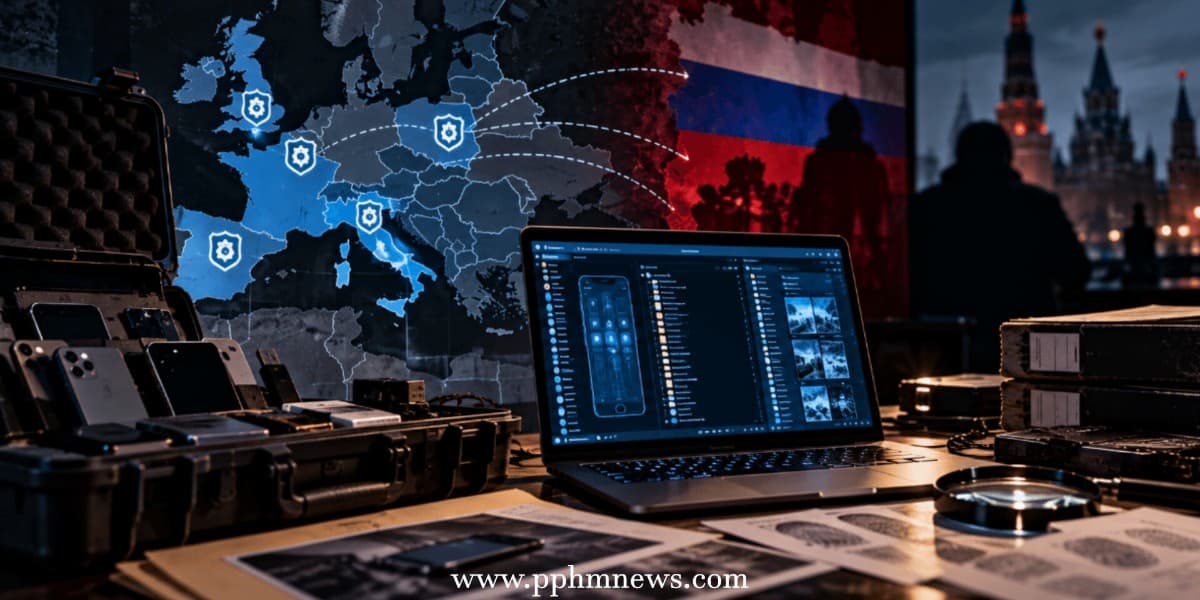
Russian Ownership Allegations Put European Forensic Deployments Under Review
European law-enforcement agencies are reviewing their exposure to Oxygen Forensics after U.S. prosecutors alleged that the Virginia-based digital-forensics supplier concealed Russian ownership and Russia-based software development while selling powerful investigative technology to Western governments.
The controversy extends well beyond U.S. agencies. Oxygen's technology has been used, purchased or recognized by law-enforcement organizations across Europe, raising new questions over software provenance inside systems handling highly sensitive digital evidence.
Forensic Technology Reached Multiple European Agencies
Oxygen develops tools capable of extracting and analyzing information from smartphones, computers and other electronic devices.
Products Appeared Across European Law Enforcement
Recent reporting identifies Oxygen technology in countries including Germany, Spain, Italy and Poland, while additional European authorities have also used or evaluated its products.
London's Metropolitan Police has suspended its use of Oxygen software while conducting a review, and Latvian police have taken similar action.
EU Projects Incorporated Oxygen Technology
Oxygen technology also appeared in at least two EU-funded digital-evidence projects.
The €1.9 million EVIDENCE initiative, which ran from 2014 to 2016, consulted Oxygen while developing mechanisms for exchanging electronic evidence.
A later Horizon 2020 project, INSPECTr, incorporated support for evidence extracted using Oxygen products.
The European Commission has clarified that Oxygen itself was not a consortium member and did not receive EU funding through those projects.
U.S. Prosecutors Allege Russian Control Was Concealed
The scrutiny follows the arrests of Oxygen CEO Lee Reiber and Russian national Oleg Davydov, who face a U.S. conspiracy-to-commit-wire-fraud charge.
Developers Allegedly Operated From Russia
Federal investigators allege that five Russian nationals controlled Oxygen through a Cyprus-based structure and that its forensic software was developed by personnel in Russia under Davydov's supervision.
The same individuals allegedly controlled Russian company MKO Systems, formerly Oxygen Software LLC.
According to prosecutors, MKO sold related technology to Russian government customers including the FSB, Investigative Committee and Ministry of Internal Affairs.
No Backdoor Has Been Alleged
The distinction is critical from a cybersecurity perspective.
Supply-Chain Risk Does Not Equal Proven Espionage
The U.S. criminal complaint does not allege that Oxygen software contained malicious code, nor does it claim that the company secretly accessed customer systems or data.
The current case centers on alleged misrepresentations concerning ownership, corporate control and software development.
That means describing Oxygen's European presence as confirmed Russian espionage would go beyond the available evidence.
Digital Forensics Creates an Exceptional Trust Requirement
The case nevertheless exposes a serious software supply-chain problem.
Digital-forensics platforms routinely process some of law enforcement's most sensitive material—device contents, communications, location records, credentials and evidence from criminal investigations.
Provenance Must Become Part of Security Assessment
Traditional security reviews concentrate heavily on vulnerabilities and malicious code. The Oxygen case demonstrates why agencies must also continuously verify beneficial ownership, developer locations, build environments, update infrastructure and foreign influence over suppliers.
Forensic software can pass technical security testing while still presenting procurement and national-security concerns if authorities do not know who ultimately controls its development.
The wider lesson is clear: for technology operating inside sensitive investigative environments, knowing who built the software—and who controls the company behind it—is itself part of cybersecurity.